
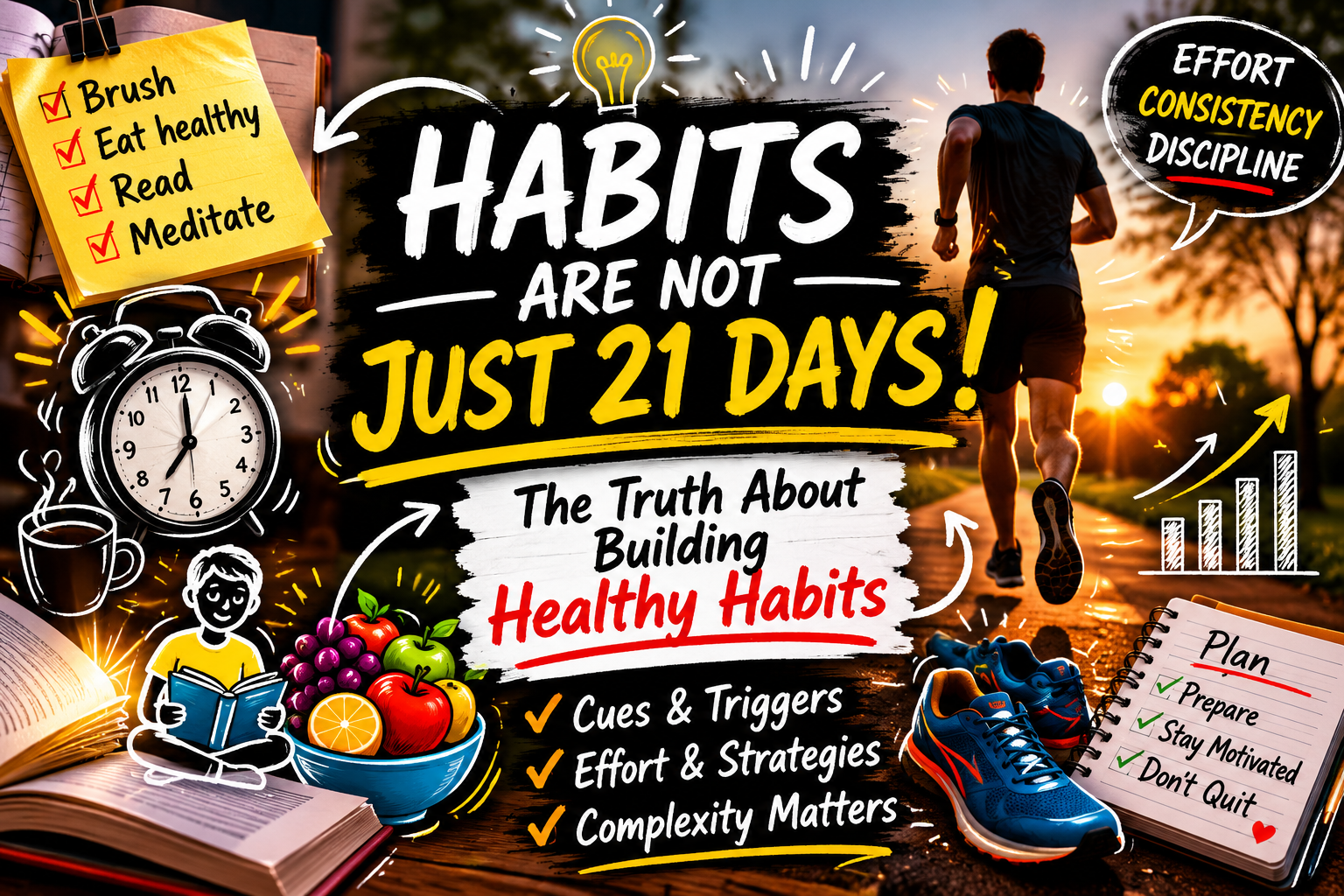
The Myth of Effortless Habits
Forming desirable habits in life can be a blessing. Habits such as eating more fruits, reading regularly, or meditating can greatly improve our well-being. But what does it really take to make these behaviors part of our daily lives?
Many self-help books suggest that it takes only 21, 66, or some fixed number of days to form a habit. It is true that practicing a behavior repeatedly can make it habitual, especially when it is attached to specific cues, such as exercising in a particular place every day. For example, how many of us need to set an alarm to remember to brush our teeth in the morning? We perform some actions so automatically that we sometimes forget whether we have done them at all, such as locking the front door before leaving home.
However, is forming healthy habits really that straightforward?
Consider the example of running. Many people have been running for years. They wake up early, tie their shoelaces, and head out onto the road. Yet the act of running itself often does not become completely effortless. The truth may be more complicated than popular habit theories suggest. Some behaviors may never operate entirely on autopilot.
A key factor is the complexity of the behavior. Taking a daily vitamin pill is quick and simple, whereas going for a run requires time, energy, motivation, and often overcoming discomfort. We also notice that habits requiring less effort, such as washing our hands before meals, become automatic much more easily than demanding activities like exercising regularly.
Research has shown that even people whose exercise routines have become strongly habitual still rely on various strategies to get themselves started. They may prepare their clothes the night before, schedule workouts with friends, or remind themselves of their goals. In other words, the habit often lies in initiating the behavior rather than effortlessly performing it.
The desirable behaviors we hope to make part of our lives are unlikely to become completely automatic. Therefore, if a guru or self-help book tells you that you only need to persist for 21 days and everything will become easy, be cautious. And if you fail to follow through after those 21 days, do not immediately doubt yourself.
Forming a new habit is not simply about repeating a behavior until it becomes automatic. It also involves creating supportive strategies, environments, and routines that encourage the behavior over time. Lasting change is often less about effortless habits and more about building systems that help us continue acting in the way we desire.