
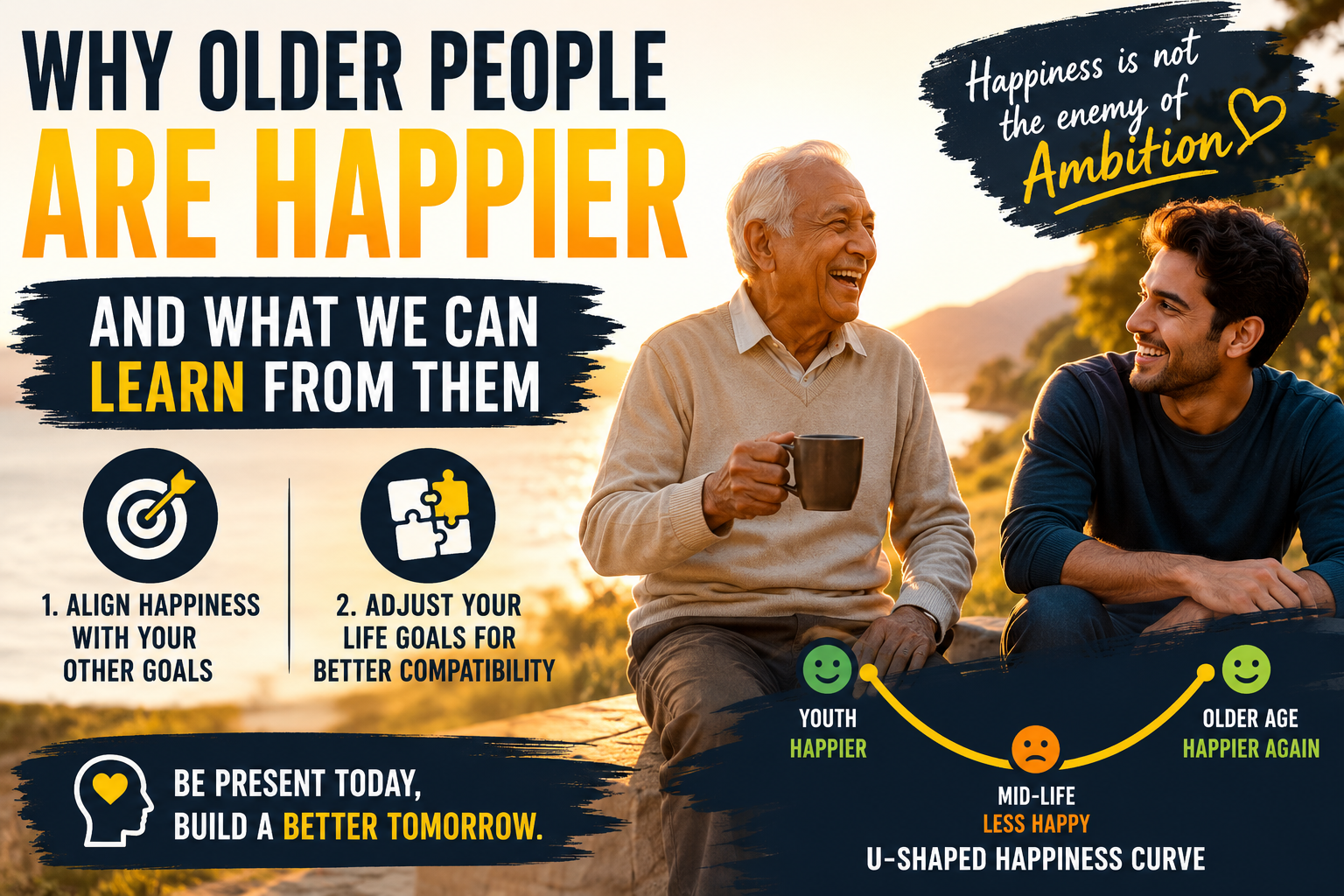
There is a general trend around the world that older people tend to be happier. However, happiness is more closely related to our priorities than to wisdom that comes with age.
Most of us have seen our parents come home happy after spending an entire day outdoors or doing something that genuinely interests them. In that happiness, there may be fatigue and even pain, yet many of us are deprived of such experiences. In psychology, this is often referred to as hedonic happiness.
Ironically, if you constantly chase happiness, you may end up feeling even sadder. This is known as the happiness paradox. It is like trying to catch a wet bar of soap—the harder you squeeze, the more slippery it becomes.
Research also shows that the happiness curve is generally U-shaped across the lifespan. People tend to be happier when they are young, less happy during middle age, and happier again in old age. This is surprising because older adults are more likely to face illness, physical limitations, and loneliness. So, what can we learn from them?
For younger and middle-aged adults, life goals are often crowded with competing priorities. In youth, we compete with our friends and peers. In middle age, we focus on building careers and fulfilling family responsibilities. As a result, we spend much of our lives delaying gratification, believing that our sacrifices today will pay off tomorrow.
Because of this mindset, when younger people engage in activities that bring immediate pleasure, they often experience a conflict of interest. Instead of enjoying the moment, they feel guilty, as if they have wasted another day of their lives.
For older people, priorities gradually shift. One might assume this happens because of life experience, but research suggests it is more closely related to the perception of limited time. As people grow older, the future feels shorter, and their goals shift from long-term achievement toward emotional well-being, meaningful relationships, and present-moment fulfillment.
The most important lesson we can learn from older adults is that happiness should be compatible with our other goals. We can deliberately adjust our life goals to create better compatibility between achievement and happiness.
At this point, you might be wondering how someone in their twenties or thirties can live like a retired person. After all, we have careers to build, mortgages to pay, and responsibilities to fulfill. But this question is based on a false assumption—that happiness and ambition are enemies.
We often believe that stress and hard work are the fuel of success, while relaxation is the opposite of productivity. On the other hand, some people fall into the “you only live once” trap, seeking constant instant gratification while abandoning long-term goals altogether.
Both extremes miss the mark. The first may help you achieve career success, but can leave you with damaged relationships, exhaustion, and frustration. The second may provide temporary pleasure but leaves life without direction or purpose.
Happiness is neither a luxury nor the enemy of ambition. Happiness and ambition can complement each other.
When you spend time with friends, do not automatically see it as wasted time. Think of it as emotional recovery and preparation for a better tomorrow. Each of us is unique, so we must decide for ourselves how to transform guilt into meaningful and well-rounded experiences.
One practical approach is to choose activities that serve multiple purposes. If you want to socialize and attend a party, invite your friends along. If you enjoy writing, start writing—it may help others while also giving you a sense of purpose. If you are passionate about fitness, spread awareness and encourage others to live healthier lives. When you positively impact someone’s life, happiness often follows naturally.
Being present is not an escape from the future. Rather, it is the foundation upon which a successful future is built.