
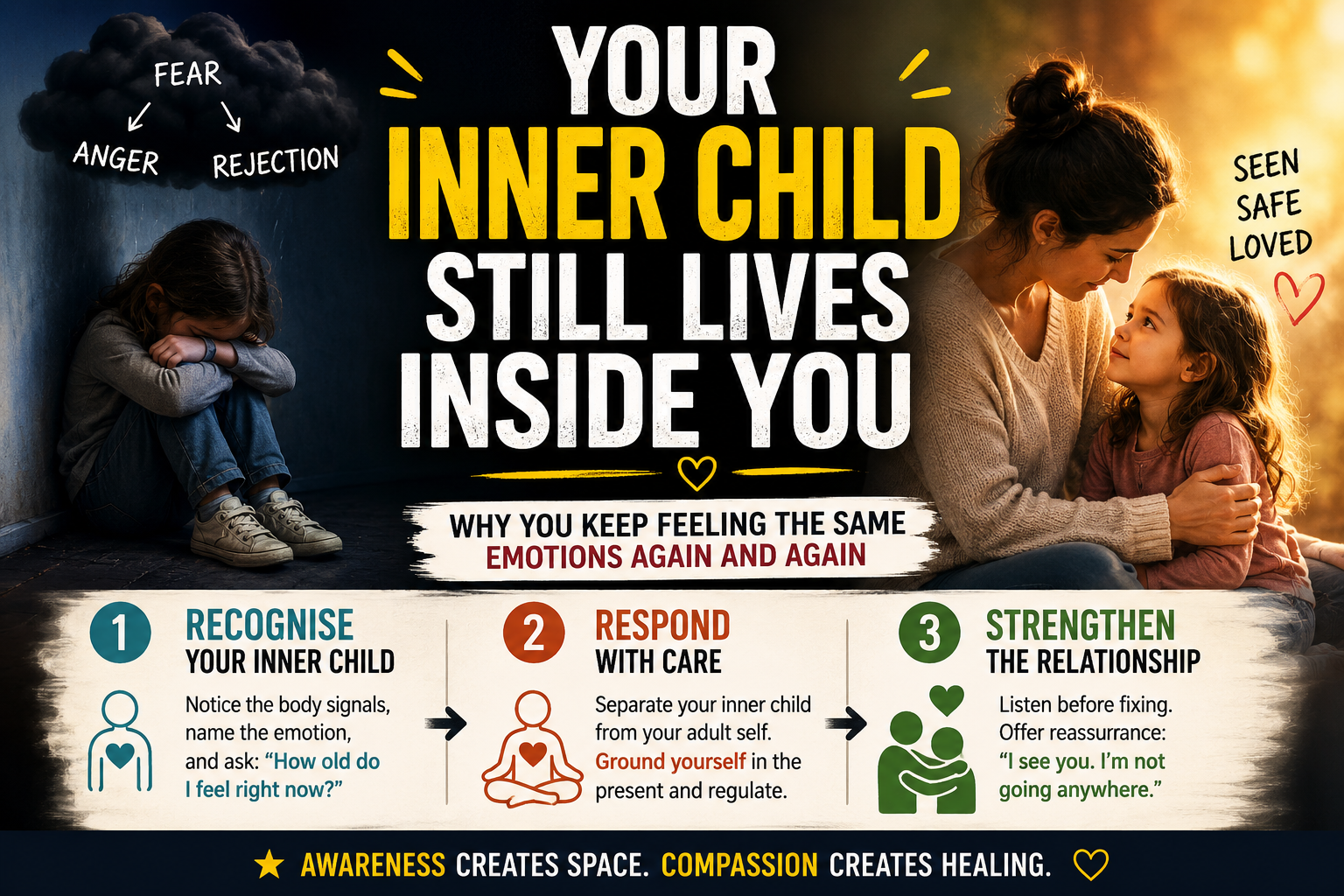
How Your Childhood Shapes Your Emotional Life as an Adult
The experiences you had as a child often continue to influence your emotional life as an adult.
Do you find yourself experiencing the same difficult emotions repeatedly — sudden anger, fear of rejection, emotional withdrawal, or anxiety? It may feel easy to blame stress or current circumstances, but often something much older lies beneath these reactions: an inner child who never felt fully seen, safe, or loved.
If you recognise any of these emotional difficulties, this article might help.
Even people who grow up in caring families can carry unprocessed emotional imprints. Sometimes, emotional needs were unintentionally missed, feelings were not fully understood, or painful moments were never emotionally processed.
Most of the time, our instinct is to suppress difficult emotions. While this may help in the immediate moment, it can make life harder in the long run. Slowly, life becomes less about experiencing and more about avoiding danger — less about living and more about surviving.
A healthier approach is to bring these emotional patterns into awareness. The adult version of you can begin to do what the child version could not: pause, reflect, and regulate.
What Can You Do?
Healing your inner child does not happen overnight. It is a gradual process of awareness, compassion, and emotional safety.
These steps can be understood in three phases:
1. Learn to Recognise Your Inner Child
The inner child often communicates through the body rather than through clear thoughts.
You may notice:
- A tight chest
- A sinking feeling in the stomach
- An urge to withdraw, people-please, cling, or shut down
When you experience one of these emotionally overwhelming moments, pause and simply notice what is happening.
You might silently say to yourself:
“Something younger in me is reacting right now.”
Or:
“A younger part of me is feeling fear, sadness, or rejection.”
This small act of awareness helps separate the present situation from the emotional memories of the past that may have been triggered.
To go deeper, gently ask yourself:
“How old do I feel right now?”
Trust the first impression. It may appear as a number, an image, or simply a feeling. The goal is not perfect accuracy — it is emotional attunement.
Spend a few weeks simply practising this first step before moving to the next.
2. Learn to Respond When Strong Emotions Arise
Once you feel comfortable recognising these emotions, begin separating your inner child from your adult self.
You might tell yourself:
“One part of me feels scared right now, but another part of me knows I am safe.”
Then gently ground yourself in the present moment:
- Feel your feet touching the floor
- Notice objects around you
- Slow your breathing
- Remind yourself where you are and that this moment is different from the past
These actions help calm the nervous system and prevent emotions from becoming overwhelming.
3. Strengthen the Relationship Over Time
Healing happens through repetition.
When sadness, fear, or anger arises, resist the urge to immediately “fix” yourself.
Instead, try listening.
You might silently say:
“I see you.”
“I am here with you.”
“I am not going anywhere.”
This mirrors what a caring and emotionally responsive adult offers a distressed child.
Over time, these small moments begin to create something powerful: the feeling that emotions can be tolerated, safety can exist, and connection does not disappear when life becomes difficult.
Final Thought
Healing your inner child is not about blaming the past. It is about understanding how the past may still be living inside you.
Awareness creates space. Compassion creates healing.
And sometimes, the adult you are today can finally offer the care that the younger you once needed.