
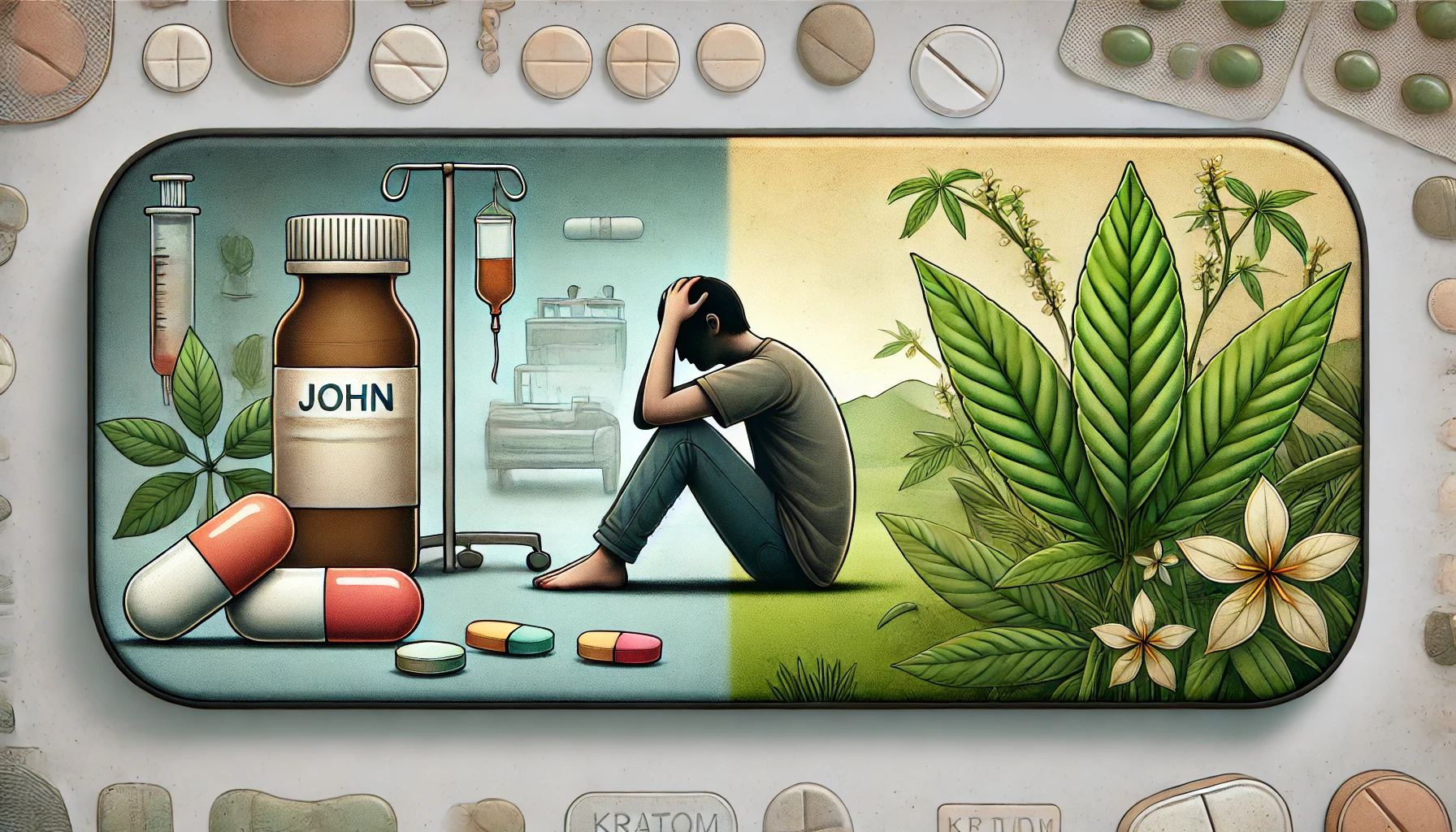
Mr. John became addicted to prescription opioids in the early 2000s after undergoing multiple surgeries due to being born with flat feet. These surgeries left him in severe pain, leading to opioid prescriptions that ultimately ruined his life. After high school, he was caught stealing money to buy street drugs. His uncle sent him to rehab, but the strict rules clashed with John’s personality. He was eventually given a safer drug, which caused withdrawal symptoms and led to him being labeled an addict—a source of deep shame for him.
In 2017, while visiting a friend who had recently become sober, John was introduced to Kratom, a herbal supplement derived from a tree. At low doses, it acts like a stimulant, similar to tea, while at higher doses, it mimics opioids. Although the U.S. Drug Enforcement Agency attempted to make Kratom illegal, researchers argued it could serve as harm reduction for people like John, who found that Kratom effectively alleviated his withdrawal symptoms. He said, “When I took Kratom, I felt completely normal.”
However, over time, John became addicted to Kratom, taking it after every significant event in his life. He eventually faced problems related to Kratom, a substance with atypical opioid effects. Rare side effects, such as seizures and liver issues, started to surface, and the first reported death linked to Kratom was published—though it largely remained outside mainstream media.
At the very least, it is time to regulate the unchecked use of Kratom. Though it may provide relief for some, its risks cannot be ignored. Proper medical supervision is crucial to ensure that people like John do not trade one addiction for another.
I enjoy reading blogs @mediabox.
Please post some more blogs.