
I was born and raised in a village, and there was a time when a severe drought struck. The winds were dry, and the rich black soil had turned barren.
The farmers prayed for rain, but the rain never came. I shall never forget that difficult year.
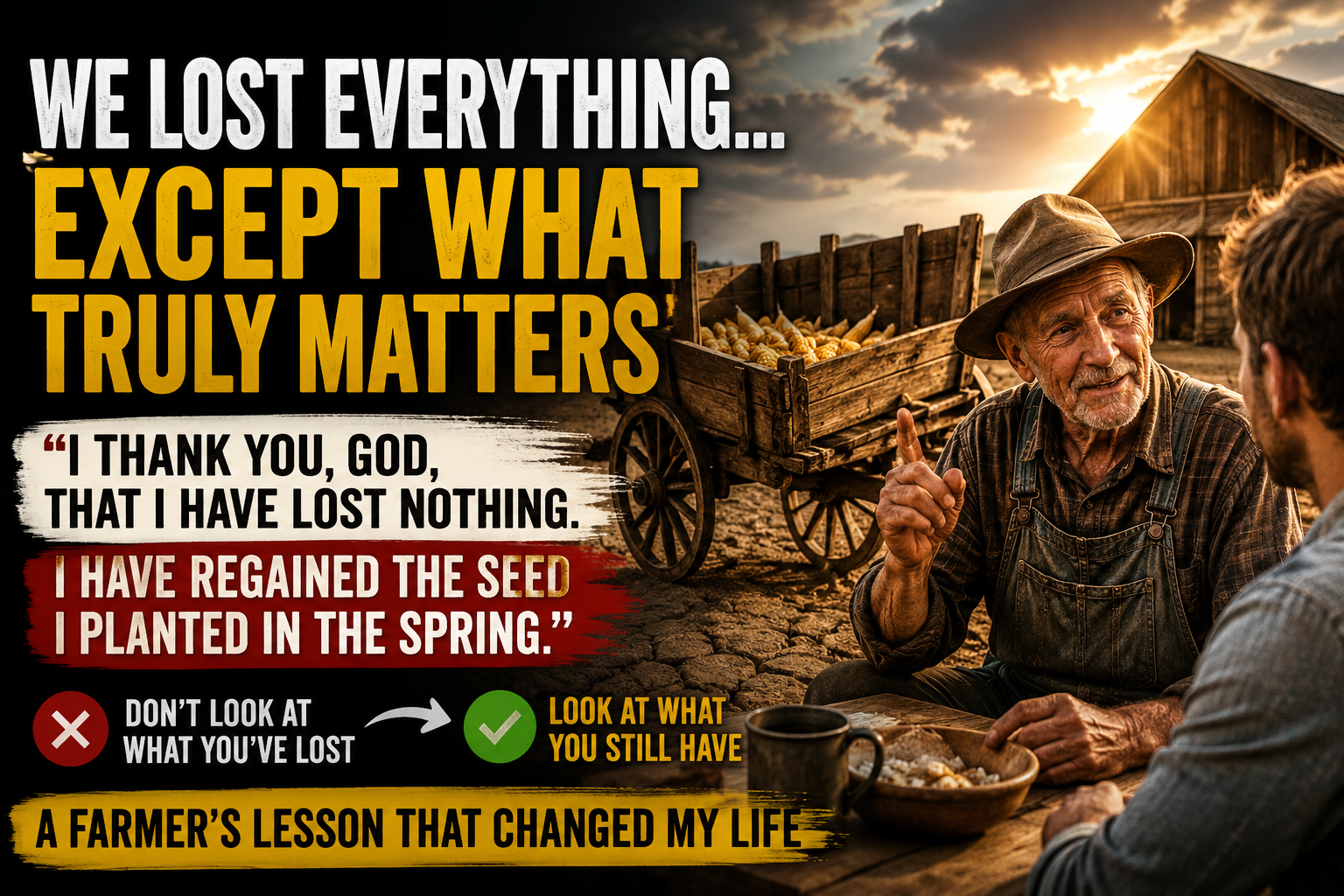
When the harvest season arrived, farmers who would normally harvest a hundred wagonloads of corn could barely gather enough to survive. I remember that year vividly. Instead of harvesting around 120 wagonloads as they usually did, one farmer managed to harvest only half a wagonload. I can still picture the old wagon standing in the yard—only half full. It was a total crop failure, a disaster unlike anything before or since.
Do you know what happened next? I shall never forget it.
I was having lunch with one of the farmers when he bowed his head and said, “I thank You, God, that I have lost nothing. I have regained the seed I planted in the spring.”
He had sown half a wagonload of seed, and he harvested exactly half a wagonload in return. His attitude was one of gratitude. While other farmers lamented, “We have lost a hundred wagonloads,” he chose to focus on what he still had.
Then he said something I have never forgotten:
“You can never count the might-have-beens, or you will be defeated. Never look at what you have lost. Look at what you have.”
Those words of wisdom came from a farmer who had never studied beyond the sixth grade, yet they played an immeasurable role in shaping me into the possibility thinker I am today.
I am happy to tell you that when he eventually retired, he was no longer a poor farmer. Because of his attitude, perseverance, and gratitude, he prospered and was able to leave a fine estate for his children.